Bloomington doesn’t feel like moving to Indiana. It feels like moving to a city that happens to be in Indiana — a place with a specific gravitational field created by Indiana University, the arts community that grew up around it, and the limestone-quarry topography that gives it hills, ravines, and a natural beauty that makes outsiders do a double take when they first drive in from the flat farmland that surrounds it.
The practical reality for renters: Bloomington is more competitive, more seasonal, and more geographically specific than most Indiana markets. Understanding those three things before you arrive will save you significant stress.
The Rental Market Calendar: Timing Is Everything
Indiana University’s academic calendar drives Bloomington’s rental market with unusual intensity. The critical windows:
- January-March: Peak leasing season for August move-ins. This is when current residents decide on renewal and when professionally managed communities fill their available inventory for the following fall. If you’re arriving for an August start and haven’t engaged by March, you’re competing for what’s left.
- April-June: Secondary window. Some availability exists, particularly at Class A communities that have longer lease cycles than student housing, but selection narrows.
- July-August: Move-in season for IU. Traffic, U-Hauls, and competition for remaining units peak simultaneously. Starting your search here puts you in reactive mode.
- September-December: The quietest leasing period. Communities with January availability can sometimes be found, and touring in the fall gives you an accurate sense of a neighborhood’s character — including whether it’s student-dense or professionally oriented.
The Geography: What “Near Campus” Actually Means
IU’s Bloomington campus spans about 1,900 acres — roughly 3 miles east-west and 2 miles north-south. “Near campus” can mean a 5-minute walk from the Fine Arts building on the west side or a 25-minute walk to the Wells Library from an apartment on the far east side. Before committing to any address, map the specific walk or drive from that apartment to your primary building, lab, or department. The campus is large enough that this matters daily.
The key roads for Bloomington renters: College Avenue (north-south, runs along the campus’s western edge), Walnut Street (north-south, the main commercial artery east of campus), 3rd Street (east-west through the near-campus residential core), and the SR-45/46 bypass (the ring road that connects to College Mall and the IU Health corridor on the east side).
The Neighborhoods That Matter for Newcomers
The Near-Campus Core (2nd Street / Indiana Avenue)
The blocks immediately surrounding IU’s campus — along Indiana Avenue, 2nd Street, and 3rd Street — are the most walkable and the most student-dense. Undergraduates dominate this rental market. Graduate students and faculty who want quiet and a more stable residential environment almost universally look further out.
Downtown (Kirkwood Avenue / The Square)
Bloomington’s downtown anchored by the Monroe County Courthouse and the Kirkwood Avenue pedestrian corridor is one of Indiana’s most genuinely walkable urban cores. The Saturday Farmers’ Market (April-November) on Showers Plaza draws the whole city. The B-Line Trail connects downtown south through Switchyard Park and into residential neighborhoods. Living downtown puts you in the center of Bloomington’s best restaurant, coffee, and cultural scene — at rents that typically reflect the location premium.
East Side (College Mall / Echo Park / IU Health Corridor)
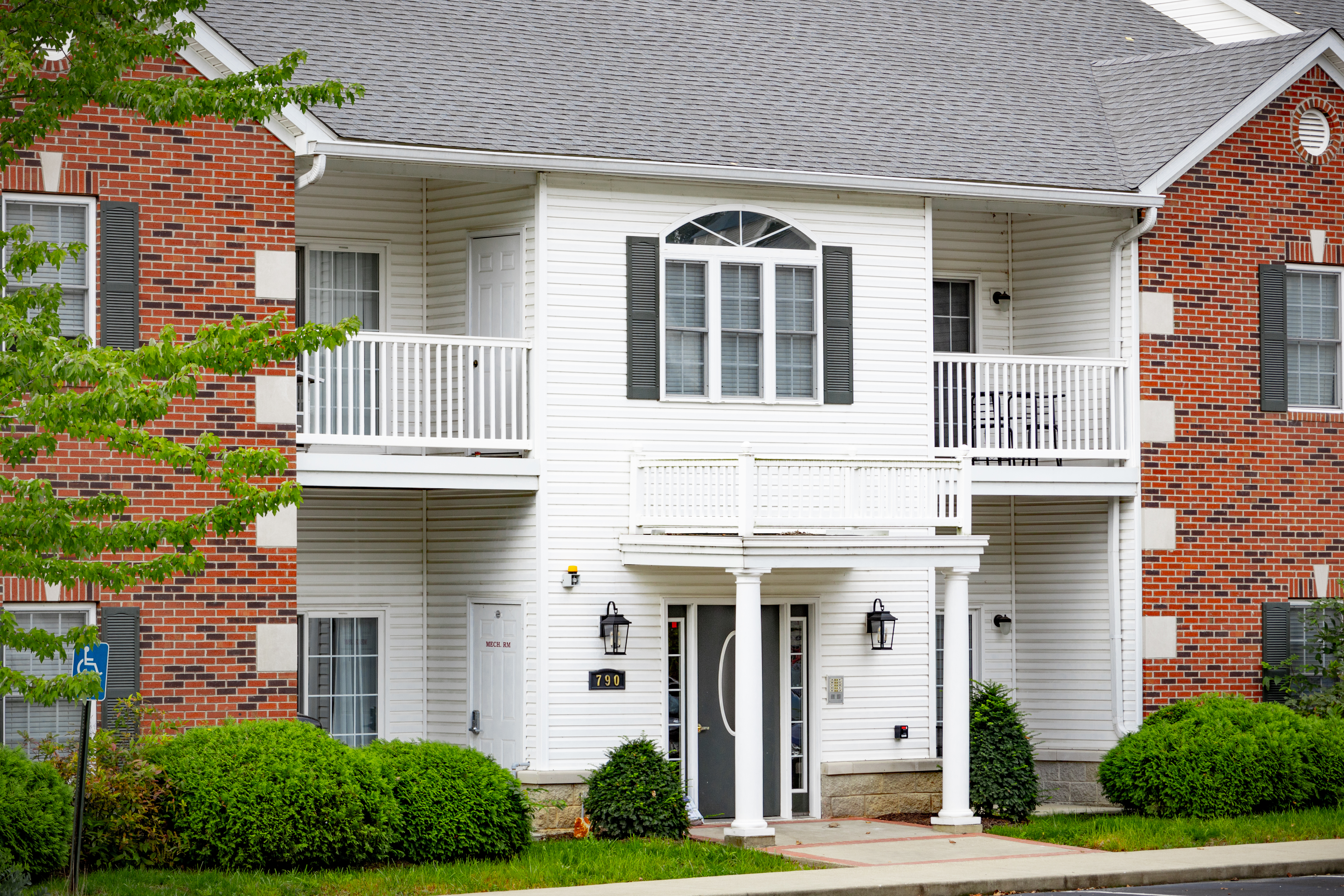
The eastern corridor along SR-45/46 and College Mall Road is where Bloomington’s best retail concentrates and where IU Health Bloomington Hospital sits. Echo Park Apartments, Gray Residential’s 154-unit Class A community, is positioned in this corridor — offering modern finishes and professional management in a location that serves both IU-affiliated renters and healthcare professionals at IU Health. This is the corridor that best balances campus access with suburban convenience and retail proximity.
South and Southwest (Tapp Road / Near Lake Monroe)
The southern corridors toward Lake Monroe and Hoosier National Forest attract renters who prioritize outdoor access and a quieter residential character. Forest Ridge, Gray Residential’s community on the south side, serves renters in this corridor who want distance from campus density while staying connected to Bloomington’s amenities.
What Newcomers Underestimate About Bloomington
- Cook Medical’s presence: Bloomington is a world medical device company headquarters, not just a college town. Cook Medical and affiliated companies employ thousands of engineers and professionals who aren’t IU-affiliated at all. The Cook campus on Wapehani Mountain Bike Park Road is a significant employment anchor on the south side.
- The restaurant scene is genuinely good: The concentration of international students, faculty, and arts professionals has created a food scene that punches well above Bloomington’s size. The weekly Farmers’ Market alone draws visiting chefs from Indianapolis and Chicago.
- Parking downtown is harder than it looks: The Courthouse Square area has metered and garage parking, but it fills. If you live downtown without on-site parking, budget for a monthly parking pass or plan around the parking constraints.
- Lake Monroe is 10 minutes from the center of campus: Indiana’s largest reservoir is south of the city on SR-37/446. It’s not a weekend-only destination — Bloomington residents kayak, sail, and swim there on weekday evenings during warm months.
Starting Your Bloomington Apartment Search
Explore Echo Park Apartments and Forest Ridge, both managed by Gray Residential, to find a Bloomington home that fits your timeline, your employer, and the Bloomington lifestyle you’re moving here to live.
Leave a Reply